
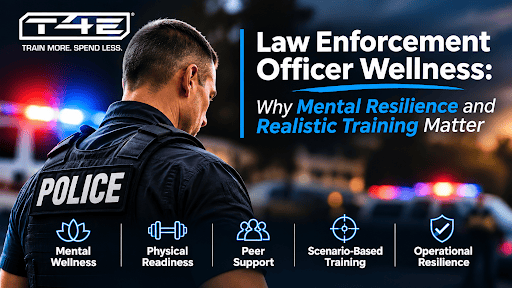
Every emergency call begins with someone who needs help. But behind every call is also a law enforcement officer expected to make critical decisions, remain calm under pressure, and protect the lives of others.
Behind the badge is a person who experiences stress, fatigue, difficult situations, and the emotional demands of serving their community.
Law enforcement officer wellness is an essential part of operational readiness. Supporting officers through mental health resources, physical fitness, peer support, and realistic scenario-based training can help departments build a more prepared and resilient workforce.
What Is Law Enforcement Officer Wellness?
Law enforcement officer wellness refers to the physical, mental, emotional, and social well-being of police officers and other law enforcement professionals.
A comprehensive officer wellness program may include:
- Mental health and stress-management resources
- Physical fitness, sleep, and recovery programs
- Peer support and confidential counseling
- Resilience and decision-making training
- Scenario-based law enforcement training
- Leadership support and a positive department culture
Why does officer wellness matter? Because officers who have access to appropriate training, resources, and support are better positioned to manage the demands of their profession and maintain their well-being.
How Does Stress Affect Law Enforcement Officers?
Police officers regularly encounter situations involving uncertainty, conflict, traumatic events, and high-stakes decisions.
Repeated exposure to occupational stress can contribute to fatigue, sleep difficulties, emotional exhaustion, and challenges with concentration.
Stress can also influence how individuals process information and respond during rapidly changing situations.
Departments can help address occupational stress through consistent training, supportive leadership, access to qualified mental health professionals, and opportunities for recovery.
Officer mental health and operational readiness should be treated as connected priorities, not competing responsibilities.
How Can Scenario-Based Training Support Officer Readiness and Resilience?
Scenario-based law enforcement training allows officers to practice responding to realistic situations in a controlled learning environment.
Rather than focusing exclusively on technical skills or static qualification exercises, scenario-based training introduces decision-making, communication, movement, and changing circumstances.
Key Benefits of Realistic Law Enforcement Training
1. Decision-Making Under Pressure
Officers practice assessing situations, identifying potential threats, and selecting appropriate responses while managing competing demands.
2. Communication and De-Escalation
Realistic exercises provide opportunities to practice verbal communication, active listening, conflict resolution, and de-escalation techniques.
3. Situational Awareness
Dynamic scenarios encourage officers to observe their surroundings, recognize changing conditions, and adjust their responses appropriately.
4. Teamwork and Coordination
Force-on-force and scenario-based exercises can strengthen communication and coordination among officers responding to complex situations.
5. Confidence Through Preparation
Repeated opportunities to practice skills and receive constructive feedback can help officers develop confidence in their training and decision-making processes.
Realistic training is not a substitute for mental health care or comprehensive wellness programming. However, it can play an important role in an agency's broader approach to officer preparedness.
Why Force-on-Force Training Matters in Modern Law Enforcement
Traditional firearms qualifications evaluate important technical skills, but real-world encounters often require much more than marksmanship. Officers need to communicate with distressed individuals, evaluate whether force is necessary, coordinate with partners, and make decisions in unfamiliar environments.
Force-on-force training allows officers to practice tactical and decision-making skills during interactive, controlled scenarios.
Products such as the T4E Walther PDP Optic-Ready Training Marker provide an equipment platform for instructors developing exercises involving:
- Duty-relevant equipment handling
- Movement and positioning
- Threat recognition and response
- Communication and de-escalation
- Decision-making in dynamic environments
- Team coordination and after-action evaluation
The goal is not simply to teach officers how to react. It is to help them evaluate situations, communicate effectively, and make responsible decisions.
Why Psychological Safety Matters During Police Training
Psychological safety in training means creating an environment where participants can ask questions, acknowledge mistakes, and participate in constructive discussions without unnecessary humiliation or fear of retaliation.
Instructors can promote a supportive training environment by:
- Clearly communicating training objectives and expectations.
- Using scenarios appropriate to participants' experience levels.
- Providing structured opportunities for feedback.
- Encouraging discussion during after-action reviews.
- Recognizing individual responses to stressful exercises.
- Connecting personnel with additional support when appropriate.
A successful training program should emphasize learning and improvement rather than stress for its own sake.
Five Ways Law Enforcement Agencies Can Prioritize Officer Wellness
Departments looking to strengthen officer wellness and resilience can begin by integrating support into everyday operations.
1. Provide Access to Mental Health Resources
Make confidential counseling, crisis support, and qualified mental health services accessible to personnel. Encourage officers to seek assistance when needed.
VALOR Officer Safety and Wellness Initiative
2. Establish Peer Support Programs
Peer support programs can provide officers with opportunities to connect with trained colleagues who understand the unique challenges of law enforcement.
3. Encourage Physical Fitness and Recovery
Physical activity, adequate sleep, nutrition, and recovery practices are important components of overall well-being and occupational readiness.
4. Invest in Ongoing Scenario-Based Training
Provide regular opportunities to practice communication, decision-making, de-escalation, and tactical skills in controlled environments.
5. Build a Supportive Leadership Culture
Supervisors and department leadership play an important role in encouraging open communication, recognizing signs of occupational stress, and connecting personnel with available resources.
Frequently Asked Questions About Officer Wellness and Law Enforcement Training
What is the purpose of an officer wellness program?
An officer wellness program supports the physical, mental, emotional, and social well-being of law enforcement personnel. Programs may include mental health resources, peer support, fitness initiatives, stress-management education, and ongoing professional training.
Why is mental health important in law enforcement?
Law enforcement officers may experience repeated exposure to stressful and traumatic situations. Supporting officer mental health can help personnel manage occupational stress, access appropriate care, and maintain their overall well-being throughout their careers.
What is scenario-based training for police officers?
Scenario-based police training uses realistic, controlled exercises to help officers practice communication, decision-making, de-escalation, situational awareness, and tactical responses. Scenarios may involve role players, simulated environments, and specialized training equipment.
Can realistic training help improve officer confidence?
Realistic training can help officers build familiarity with challenging situations and practice applying their skills. Repetition, qualified instruction, and constructive feedback can contribute to professional confidence and preparedness, although results depend on the quality and design of the training.
What is the difference between force-on-force training and traditional firearms qualification?
Traditional firearms qualification primarily evaluates defined shooting and equipment-handling skills. Force-on-force training introduces interactive scenarios that can require officers to assess changing situations, communicate, move, and make decisions about appropriate responses.
How can police departments improve officer resilience?
Departments can support officer resilience by providing mental health resources, peer support, appropriate training, opportunities for recovery, and supportive leadership. Resilience initiatives should complement—not replace—access to professional care.
How does T4E support law enforcement training?
T4E provides training marker systems and related equipment for realistic force-on-force and scenario-based training. These products help qualified instructors create controlled exercises focused on tactical proficiency, communication, situational awareness, and decision-making.
Train for the Call. Support the Officer.
Every day, law enforcement professionals answer calls from people experiencing some of the most difficult moments of their lives. Officers deserve preparation, resources, and support of their own.
T4E is committed to supporting law enforcement agencies with realistic training solutions that help officers prepare for the challenges of modern policing.
Because behind every emergency call is someone who needs support, too. Sometimes, that someone is the officer answering it.