
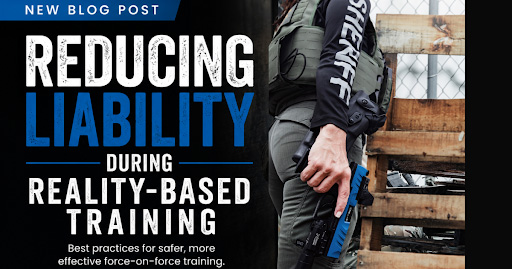
When it comes to law enforcement training, realism is essential - but so is safety. Agencies and departments across the country are expanding their use of force-on-force training, scenario-based training, and reality-based training to better prepare officers for the split-second decisions they face in the field. However, as training becomes more immersive, instructors must also prioritize reducing liability and minimizing unnecessary risk.
The good news is that agencies don't have to choose between realism and safety. By implementing proven training protocols, using dedicated non-lethal training equipment, and creating controlled environments, departments can deliver highly effective training while protecting officers, instructors, and their organizations.
Understanding Training Liability
Training inherently involves some level of risk, but many injuries and incidents are preventable.
Potential liability concerns include:
- Accidental use of live weapons
- Inadequate safety procedures
- Poor instructor supervision
- Unsafe training environments
- Inconsistent equipment inspections
- Lack of documented training protocols
- Participant injuries
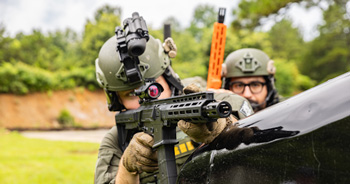 Agencies that proactively address these risks create safer training environments while reducing legal exposure.
1. Use Dedicated Force-on-Force Training Equipment
One of the most effective ways to reduce liability is by using equipment specifically designed for force-on-force training.
Dedicated T4E training markers allow officers to experience realistic scenarios without introducing live ammunition into the training environment.
Popular T4E training platforms include:
Optic-Ready Walther PDP Training Marker
Ideal for agencies carrying optic-ready duty pistols, the T4E Walther PDP provides realistic handling for:
- Building searches
- CQB drills
- Officer movement
- Decision-making scenarios
Smith & Wesson M&P9 Training Marker
Departments using Smith & Wesson duty pistols can maintain familiar ergonomics while conducting:
- Patrol scenarios
- Active shooter drills
- Reality-based exercises
- Communication training
T4E TC 68 Tactical Carbine
The TC 68 provides a realistic rifle platform for:
- Tactical team operations
- School response scenarios
- Hallway movement
- Team coordination
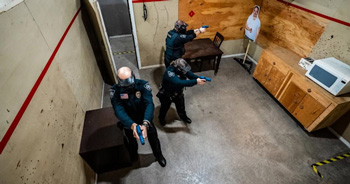 Using dedicated training markers helps eliminate one of the greatest risks in reality-based training—the introduction of live firearms into the exercise.
2. Establish a Sterile Training Environment
One of the most important safety practices is creating a "sterile" training area.
Before every exercise:
- Remove all live firearms
- Remove live ammunition
- Remove knives and secondary weapons when appropriate
- Conduct documented participant searches
- Verify all training equipment
Many agencies use a two-person verification process to ensure no live weapons enter the scenario.
3. Build Training in a Controlled Environment
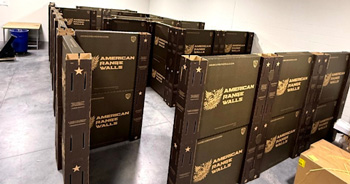 The physical training environment plays a major role in safety.
Using modular training systems, temporary corrugated wall structures, dedicated shoot houses, or existing buildings for scenario-based training allows instructors to create realistic CQB training environments while maintaining control, flexibility, and safety throughout every exercise.
Common layouts include:
- Schools
- Offices
- Apartment buildings
- Retail stores
- Hallways
- Residential homes
4. Standardize Safety Briefings
Every scenario should begin with a consistent safety briefing covering:
- Training objectives
- Safety rules
- Medical plan
- Stop commands
- Equipment inspection
- Instructor responsibilities
- Role-player expectations
Consistency reduces confusion and reinforces accountability throughout the exercise.
5. Use Qualified Instructors
Even the best equipment cannot replace experienced instructors.
Effective instructors:
- Monitor officer actions
- Pause unsafe behavior
- Control scenario progression
- Reinforce learning objectives
- Conduct detailed debriefings
Instructor oversight dramatically reduces unnecessary risk while improving learning outcomes.
6. Focus on Decision-Making, Not Winning
Reality-based training isn't about "winning" the scenario.
It's about evaluating:
- Tactical decisions
- Communication
- Threat assessment
- Judgment
- Use-of-force decisions
- De-escalation opportunities
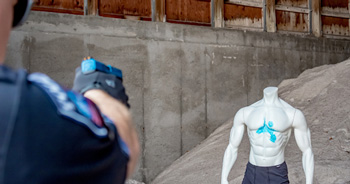 By emphasizing learning rather than competition, instructors create a safer and more productive training culture.
7. Conduct Thorough After-Action Reviews
Some of the greatest learning occurs after the scenario ends.
Debrief discussions should include:
- What happened?
- What decisions were made?
- What worked well?
- What could improve?
- Were policies followed?
- Were safety procedures effective?
Documenting these reviews also demonstrates an agency's commitment to continuous improvement and professional training standards.
8. Train Frequently Instead of Intensely
One large annual training event cannot replace regular repetition.
Short, recurring scenario-based training sessions help officers retain skills while reducing fatigue and improving consistency.
Agencies that train regularly often see improvements in:
- Officer confidence
- Communication
- Tactical efficiency
- Decision-making under stress
- Policy compliance
Creating a Culture of Safe, Realistic Training
Reducing liability isn't about limiting realism—it's about building systems that allow realistic training to occur safely.
A comprehensive training program combines:
- Dedicated force-on-force training equipment
- Structured safety protocols
- Qualified instructors
- Controlled training environments
- Clear documentation
- Consistent debriefing
When these elements work together, agencies can provide immersive, effective training while minimizing unnecessary risk.
Why T4E Supports Safer Reality-Based Training
T4E training platforms are designed to help agencies safely conduct:
- Force-on-force training
- Scenario-based training
- Active shooter response training
- Close quarters battle (CQB) training
- Officer decision-making exercises
- De-escalation scenarios
- School safety training
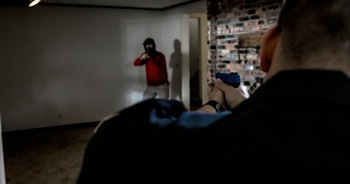 Effective reality-based training prepares officers for the unpredictable challenges and safety must always remain the foundation of every exercise.
By using dedicated training equipment, following strict safety protocols, creating controlled environments, and emphasizing realistic decision-making, agencies can reduce liability while delivering high-quality law enforcement training.
The goal isn't simply to complete another training day. It's to ensure every officer leaves better prepared, more confident, and ready to make sound decisions when lives are on the line.